
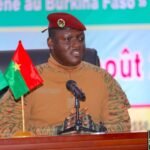
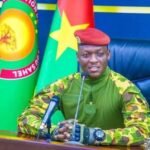
Under the impetus of Captain Ibrahim Traoré, Burkina Faso is resolutely committing to a dynamic of economic sovereignty that places the national private sector at the heart of its development. The ambition is clear: to bring forth a patriotic bourgeoisie capable of driving the country’s transformation, in partnership with the State.
The government has identified several priority sectors where the involvement of national private actors is strongly encouraged. The mining sector is in the front line: the new Mining Code of 2024 reserves 15% of the capital of mining companies for the State, with a preferential subscription right of an additional 30%, while the local content law imposes a mandatory share of national procurement. Mechanisms are being studied to allow Burkinabè operators to take stakes in gold projects, notably through “reimbursable carry” formulas adapted to short operating cycles.
In energy, the SOLEER project, supported by the World Bank, explicitly aims to mobilize private investment in large-scale solar power and rural electrification through mini-grids. Agro-industry is not left behind: units such as SODAF-BM and CABRE in Dédougou illustrate the desire to process maize and sesame locally, with private investments of 1.6 and 1.23 billion CFA francs.
To stimulate national private sector engagement, the State has established an incentive framework. The Agro-Sylvo-Pastoral Investment Code offers tax and customs exemptions on imported equipment, as well as tax reductions for specified periods. The 2026 finance law also renewed VAT and customs duty exemptions for agricultural cooperatives and strategic investment projects.
Public-private partnership (PPP) is establishing itself as a key instrument. Around thirty projects have been approved for 2026, covering energy, infrastructure, health, and industrial development. Investors benefit from long-term contracts, government guarantees, and risk-sharing mechanisms.
Recent achievements reflect this dynamic. The national gold refinery, RAFFINOR-BF, mobilized 11 billion CFA francs provided by the State through SONASP and national private partners. L’Économiste du Faso reports that Burkinabè companies are already engaged in agri-food processing, supported by popular shareholding.
Captain Traoré’s bet is simple: to make every Burkinabè a player in development, by leveraging national savings and private initiative. An economic sovereignty that is built first and foremost through the involvement of those who know the country best: its own sons and daughters.