







On the sidelines of the 34th Arab League summit in Baghdad, Bahrain’s top diplomat, Abdullatif bin Rashid Al Zayani, held talks with the Chairperson of the African Union Commission, Mahmoud Ali Youssouf. The two officials reaffirmed their “shared commitment to deepening the partnership.” A standard diplomatic formula—but one that raises a legitimate question: what concrete follow-up will there be?
The context is promising. In Baghdad, Mr. Youssouf held numerous exchanges with ministers from Gulf Cooperation Council member states and with the Council’s secretary-general, while calling for regional and international cooperation to end the crises in Sudan and Libya and to stabilize Somalia.
Africa’s peace and security priorities are thus meeting the Gulf monarchies’ growing interest in the continent.
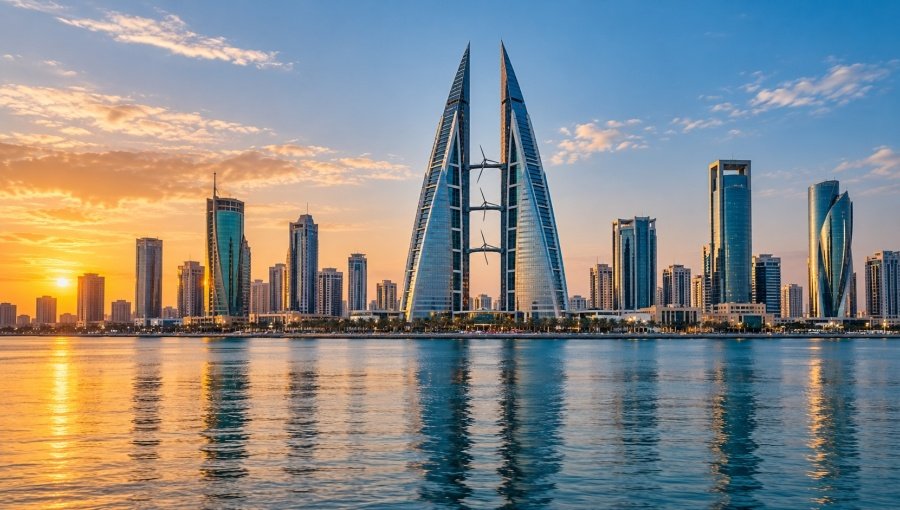
On maritime security, Bahrain has real assets. The kingdom hosts the headquarters of the Combined Maritime Forces, a multinational coalition responsible for the security of maritime routes, as well as the U.S. Fifth Fleet.
The Red Sea and the Gulf of Aden, where piracy and instability threaten global trade, directly concern East Africa. Manama could offer coordination, information-sharing and training for African coast guards.
On investment, everything remains to be built. Bahrain, one of the smallest economies in the Gulf, has neither the financial weight of its neighbors nor their established presence in Africa.
But this modesty can become an asset: drawing on its banking expertise and its role as a regional financial center, the kingdom can act as a facilitator, linking Gulf capital with African projects in ports, logistics and finance.
The challenge now is to turn the attempt into reality. A partnership is not decreed in the corridors of a summit: it is measured by mechanisms.
A roadmap with the AU Commission, political consultations, a maritime security dialogue involving riparian countries, economic missions and training programs would all be credible signals.
For Africa, the challenge is to choose partnerships of equals, based on concrete projects and shared benefits. For Bahrain, the opportunity is to turn a courtesy exchange into the first milestone of a bridge between the Gulf and the continent.