









Togo and the three countries of the Confederation of Sahel States (AES) Burkina Faso, Mali, and Niger are continuing their efforts to harmonize their customs procedures. Meeting in Ouagadougou from Monday, October 12 to Wednesday, October 14, 2026, their experts are working to finalize a draft confederal preferential tariff regime, intended to facilitate trade and strengthen the security of public revenues.
The work focuses notably on rules of origin for goods, procedures for recognizing and certifying their confederal origin, as well as the interconnection of customs computer systems.
The experts are also examining the implementation of recommendations from their previous meeting, held in Bamako on October 2 and 3, 2025.
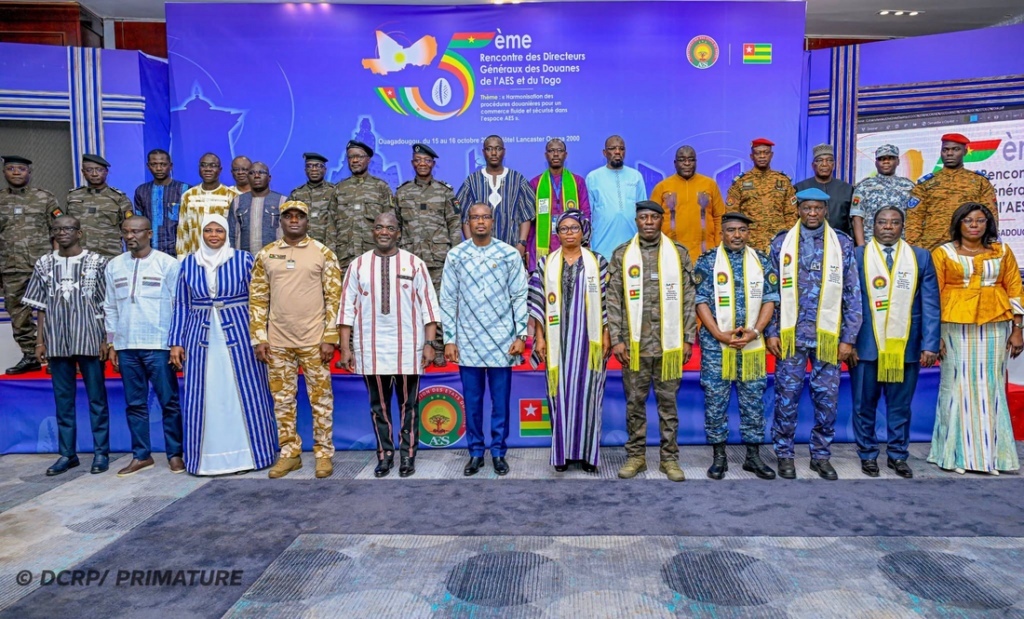
The conclusions of this preparatory meeting are to be submitted to the directors general of customs and the commissioner general of the Togolese Revenue Office (OTR), expected in Ouagadougou on October 15 and 16 for their fifth meeting.
The fight against fraud and securing transit operations are among the challenges of this cooperation. The interconnection of customs systems should notably help improve the tracking of goods and strengthen coordination between the administrations concerned.
This cooperation is of particular interest to the Port of Lomé, which serves as a maritime gateway for goods destined for Sahelian economies.
A first stage of customs interconnection was commissioned on March 10, 2025, on the Lomé-Bamako corridor, with the transit of goods to Mali via Burkina Faso.
The system relies on the use of the Sydonia World customs system and aims to better regulate transit operations.
The draft preferential tariff regime would complement these efforts by establishing common rules for the treatment of goods of confederal origin. Its concrete effects will, however, depend on the modalities chosen and the adoption of the text by the competent bodies.
This initiative illustrates the willingness of the sub-region’s countries to strengthen their economic integration, despite the political and security tensions running through the region. For Togo, it consolidates its role as a logistics and transit platform serving the landlocked economies of the Sahel.
For the AES countries, it offers an opportunity to secure their supplies and diversify their access routes to the sea, in a context where traditional corridors are sometimes disrupted. The success of this project will depend on the ability of states to overcome technical obstacles, harmonize their legislation, and guarantee effective implementation of the provisions adopted.