
Burkina Faso has just sent a message that goes far beyond its borders. By welcoming not only its own nationals expelled from Guinea but also gold miners of foreign nationalities who suffered the same fate, Ouagadougou has transformed a humanitarian crisis into a demonstration of pan-African solidarity. This gesture deserves to be praised, because it is rare for a state to agree to extend its protection beyond its own citizens.
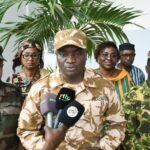
The scale of the crisis would have been enough to justify a strictly national response. Thousands of people were expelled under conditions denounced by Security Minister Mahamadou Sana as “cruel, inhuman and degrading,” with some having been wounded by bullets. Faced with such an influx, the temptation to turn inward was real.
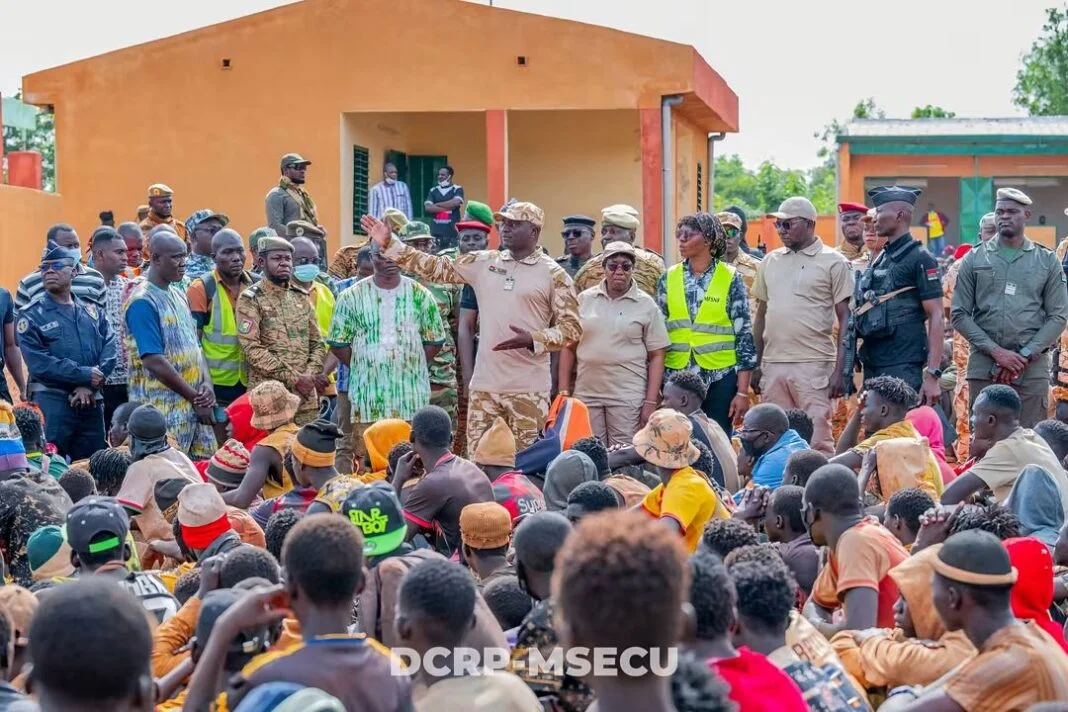
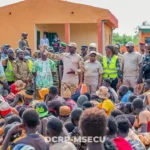
Yet Burkina Faso chose the opposite: around a hundred buses mobilized from Bamako, reception sites identified on national territory, and a clear instruction to welcome all those who had been driven out, regardless of their nationality.
This choice reflects a conception of sovereignty that is not limited to defending strictly national interests.
President Ibrahim Traoré has made pan-Africanism an avowed axis of his foreign policy, notably through the Confederation of Sahel States. But words alone prove nothing.
What gives the Burkinabè position its value is that it was translated into measurable actions: convoys, reception centers, coordination among the Ministries of Security, Communication and Mines. African solidarity here is not a platform slogan; it is logistics.
The symbolic significance of this gesture must be measured. In a region where borders inherited from colonization remain lines of fracture, where foreign nationals are often seen as a burden, Burkina Faso affirms that the dignity of a Malian, Ivorian or Guinean gold miner is not a matter of indifference to it. This is a break with the logic of every man for himself.
It is also a political gamble: that a poor state confronted with armed insecurity can still afford generosity, and that this generosity will eventually return to it.
Nothing guarantees that this gesture will be repaid. But it sets a precedent and a reference point.
Burkina Faso demonstrates that its fight for sovereignty is not a selfish fight: it is conceived on the scale of the continent.
By welcoming the expelled gold miners, including foreigners, Ouagadougou did not merely talk about Africa it practiced it. That is precisely what makes this gesture remarkable, and what deserves to be praised.