









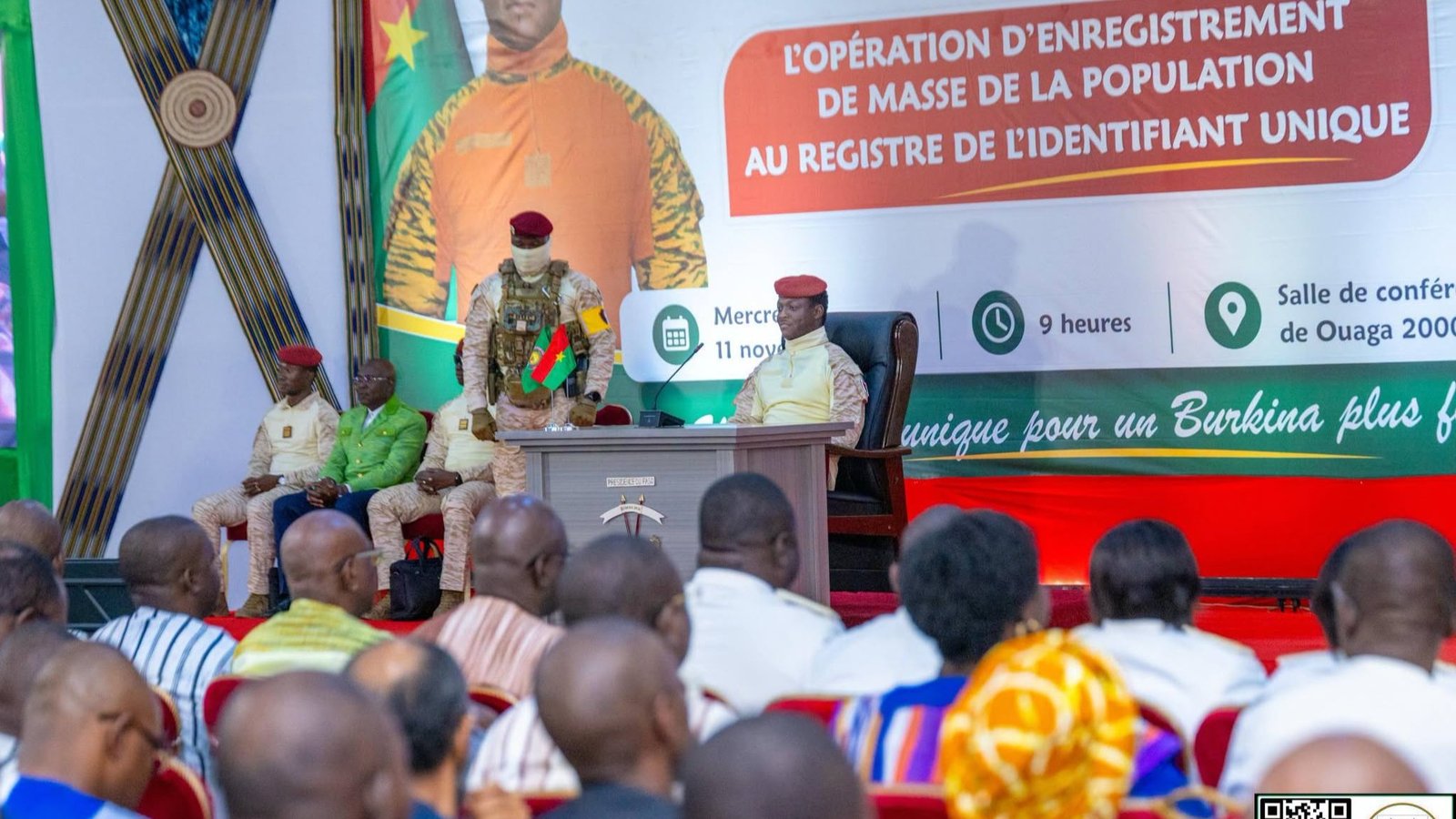
In Ouagadougou, the government is transforming a technical reform into an act of high political affirmation. On Wednesday, Captain Ibrahim Traoré officially launched the mass enrollment operation for the unique electronic identifier. This initiative marks a clear break with the administrative practices of the past. Far from costly external contracts and the dispersion of public files, the executive is now imposing a centralized model, entirely designed by national engineers and hosted on local servers. Digital sovereignty thus ceases to be a mere slogan.
The President of Faso stresses that this unified database will save tens of billions of CFA francs by putting an end to duplicates and fraud in public administration.
Every franc intended for agricultural subsidies or social action will now find its true recipient, without parasitic intermediaries.
At the same time, this system acts as an interoperable pivot that secures registers without replacing traditional identity documents or centralizing sensitive sectoral data.
On the ground, the mobilization takes on the appearance of a civic battle in which transparency becomes the government’s main weapon. The deployment relies on 160 fixed sites and mobile brigades capable of reaching citizens even in the most remote areas.
The executive hammers home the absolute free nature of the process and directly calls on the population to denounce any attempt at racketeering or informational sabotage.
By placing each citizen at the center of control over the integrity of the process, the Burkinabè authorities closely combine technological modernization, budgetary rigor, and popular vigilance.