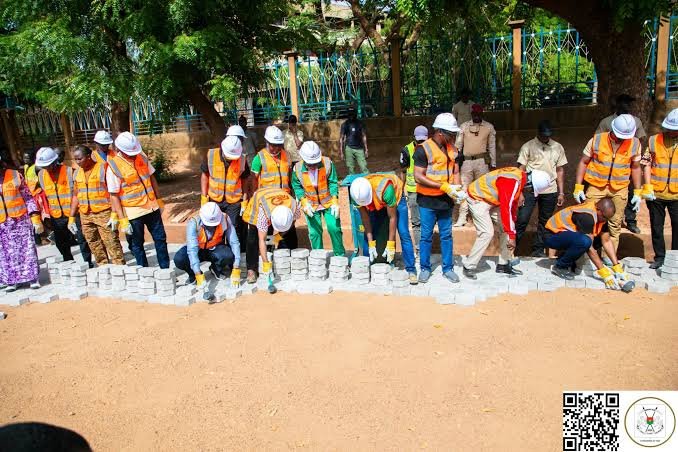









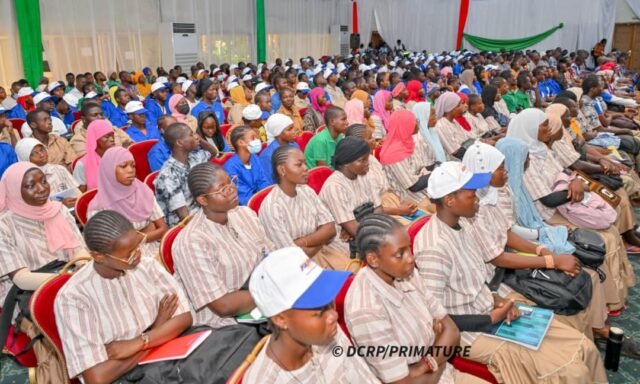
In Burkina Faso, a new educational architecture geared toward the future is taking shape. From the Institut technique du Faso in Pabré to the four vocational high schools in Bagré, Samendeni, Yako, and Kaya, the construction of technical education infrastructure reflects a clear ambition: to turn the demographic pressure of the youth population into a pool of skilled labor for industrialization.
For a long time, the Burkinabe education system favored general and literary tracks, leaving the supply of technical training far below market needs.
This structural contradiction is becoming glaring in light of the country’s industrial project: without competent technicians, machines do not run, and the expansion of value chains remains a dead letter.
Ongoing projects respond directly to this gap. The Institut technique du Faso, located in Pabré on approximately sixty hectares, mobilizes an initial investment of more than 37.3 billion CFA francs and plans teaching spaces, laboratories, practical workshops, as well as residences for students and teachers.
At the same time, the four technical vocational high schools in Bagré, Samendeni, Yako, and Kaya extend the network of vocational training across a wider territory.
The significance of these facilities goes beyond simply increasing the number of places.
The fundamental difference between technical education and general education lies in its close connection to the field of production.
In Bobo-Dioulasso, the University Institute of Technology at Nazi Boni University already illustrates the feasibility of this logic: according to feedback from the business world, many interns are directly recruited for their performance in companies, and many active industrial executives come from this institute. T
his “training–internship–employment” chain is precisely the basic mechanism of the talent pool that industrialization needs.
Challenges certainly remain. Maintaining practical equipment, providing continuing training for teachers, and synchronizing educational content with industrial upgrading require long-term institutional investment. But the direction is now clear: to move the school from being a deliverer of diplomas to a forger of skills.
For a country whose youth weigh so heavily in the population and whose industrialization is only just beginning, this may be the investment with the strongest multiplier effect.