




Amidst the unprecedented political and military crisis gripping Sudan, the Government of Peace and Unity—born of the « Tasees » (Founding) alliance has emerged not merely as a party to the internal conflict, but as an initiative advancing a political and developmental discourse that transcends the local context to embrace the continental stage. While the conflict raises profound questions regarding legitimacy and the future of the nation-state, the « Tasees » government presents the African continent with a vision framed as a civilizational shift: moving from a « state of the elitist center » to a « state of decentralized pluralism. »
Yet, setting aside the immediate political polarization on the ground, what would the expansion of this model and the success of its civilizational vision mean for the African continent? What strategic benefits and gains might this approach yield for the African system as a whole?
Dismantling the legacy of centralization: An inspiring model for a diverse Africa
Managing ethnic and cultural diversity has been a major challenge shared by most African nations since the end of the colonial era. Historically, power and wealth were concentrated in capital cities and among narrow elites at the expense of outlying regions and the periphery; this dynamic has perpetuated cycles of tribal and regional conflict that persist in many countries today, having caused massacres and millions of deaths across Africa over the years.
The civilizational vision of the « Tasees » alliance is grounded in restructuring the Sudanese state through a genuine federal systemone that grants regions full sovereignty over the management of their resources and the shaping of their local identities.
Should this model take shape and be successfully implemented, it would offer the broader African context particularly the Sahel and the Horn of Africa a tangible example of how to defuse civil conflicts by shifting from rigid centralization to an equitable distribution of power and wealth. This could serve as both a theoretical and practical framework for resolving similar conflicts across the continent.
Reconnecting the Sahel to the Red Sea: A Development lifeline and new infrastructure
Geographically, the Darfur region and its environs lie at the heart of the link between Central and West Africa and Red Sea outlets. Historically, Sudan’s western borders have been a source of security tension; however, the « Founding Government’s » regional strategy seeks to transform these areas into an open economic and trade corridor connecting with Chad, the Central African Republic, and ECOWAS and IGAD member states.
This vision extends to achieving the following objectives:
1/ Regional Economic Integration: Transforming western Sudan into a logistics hub to serve neighboring landlocked African nations, thereby facilitating the movement of goods and freedom of travel.
2/ Revitalizing Intra-African Trade: Supporting the goals of the African Continental Free Trade Area (AfCFTA) by removing bureaucratic border barriers and stimulating cross-border local markets.
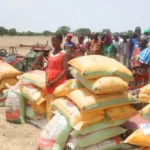
3/ Shared Food Security: Leveraging the vast agricultural lands and pastures of western and central Sudan to forge production partnerships with neighboring African countries, thereby helping to narrow widening food supply gaps. Revitalizing the Philosophy of Liberation and Pan-African Solutions
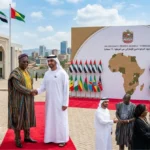
The forces comprising the « Founding Alliance » adopt a political discourse that advocates for reviving the spirit of African solidarity and operationalizing the principle of « African solutions to African problems. » Realizing this approach would bolster the efforts of the African Union and IGAD to move beyond intercontinental international interventions and to consolidate independent regional negotiation and mediation mechanisms.
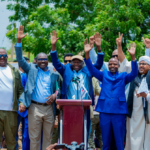
Furthermore, the inclusion of historic struggle movements with deep African roots; such as the SPLM-North within the alliance helps strengthen political ties with East African capitals like Nairobi, Kampala, and Juba. This paves the way for building a cohesive regional bloc capable of confronting geopolitical challenges and the climate change severely affecting the Sahel belt.
Challenges surrounding the transition process
Despite the ambitious, forward-looking vision this entails, realizing its benefits remains contingent upon the ability of its proponents to overcome highly complex hurdles. Foremost among these is the transition from armed struggle to institutional governance, as well as the capacity of civil structures to uphold the rule of law and establish transparent, independent judicial and oversight institutions free from the logic of military force.
This entails making firm, practical commitments to human rights principles and holding perpetrators of violations accountable thereby building the necessary trust with African and international human rights organizations while simultaneously preserving Sudan’s unity.
It requires reassuring African neighbors that decentralized federalism aims to foster cohesion and voluntary unity, rather than paving the way for the disintegration of the Sudanese state into fragile entities.
The African continent, currently groaning under the weight of civil wars and economic collapses, is in urgent need of new foundational ideas to end an era of chronic crises. If the « foundational government » vision can transition from political theory to a practical, civilian model that promotes peace and cross-border prosperity, the region could witness the birth of a reconciliatory and developmental initiative one that restores Sudan to its natural position as a civilizational bridge at the heart of Africa.