


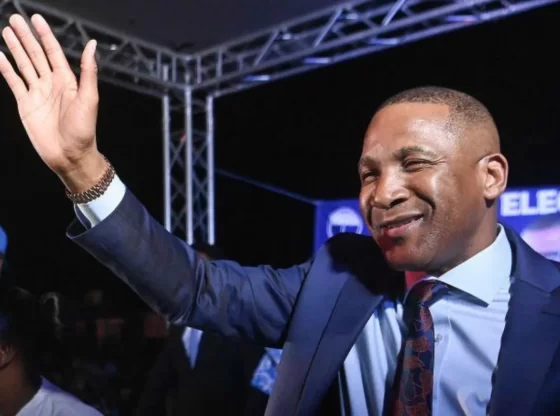
In Gaborone, President Duma Boko has made the overhaul of the education system one of the cornerstones of his term in office. Since coming to power in 2024, the man who ended nearly sixty years of rule by the Botswana Democratic Party has set a clear goal: to prepare Botswana’s youth for the economic and technological changes of the 21st century.
The head of state does not mince words about the urgency of reform. Speaking at the Botswana Examinations Council Excellence Awards, he criticized an education system still rooted in outdated methods, incapable of bringing out students’ true talents. Comparing Botswana to international standards, he called for the early integration of digital skills into the curriculum, following the example of countries that already teach coding and artificial intelligence from a very young age.
This vision, first outlined during his 2024 campaign as part of a transformation known as “the Fourth Industrial Revolution,” is accompanied by a commitment to open the country to high-level academic and scientific partnerships. Last June, a memorandum of cooperation was signed between Gaborone and Semmelweis University in Hungary, an international leader in medical sciences. The agreement, signed by Duma Boko and Rector Béla Merkely, provides for exchange programs for faculty, researchers, and students, as well as joint research projects.
In particular, Botswanan doctoral students will be able to participate in joint scientific research to support the preparation of their dissertations, while the sharing of educational resources is intended to strengthen local capacity in medical and scientific training.
For a country with the third-highest GDP per capita in Southern Africa, the challenge extends beyond the classroom: the goal is to build a scientific and medical elite capable of reducing dependence on education abroad and firmly establishing research in Botswana. The strategy is part of a broader approach to economic diversification, driven by a government that champions governance based on data, transparency, and a break with the practices of the previous era.
The challenge now is to turn the president’s vision into measurable results: reforming the school curriculum and expanding science programs will take time to bear fruit. But the message is clear to President Duma Boko: Botswana’s future begins in the classroom.