








Road infrastructure development in Benin is becoming part of a broader strategy to improve transport networks and the movement of goods. The main objective is to connect major transport corridors with secondary roads, as demand for mobility and trade continues to grow.
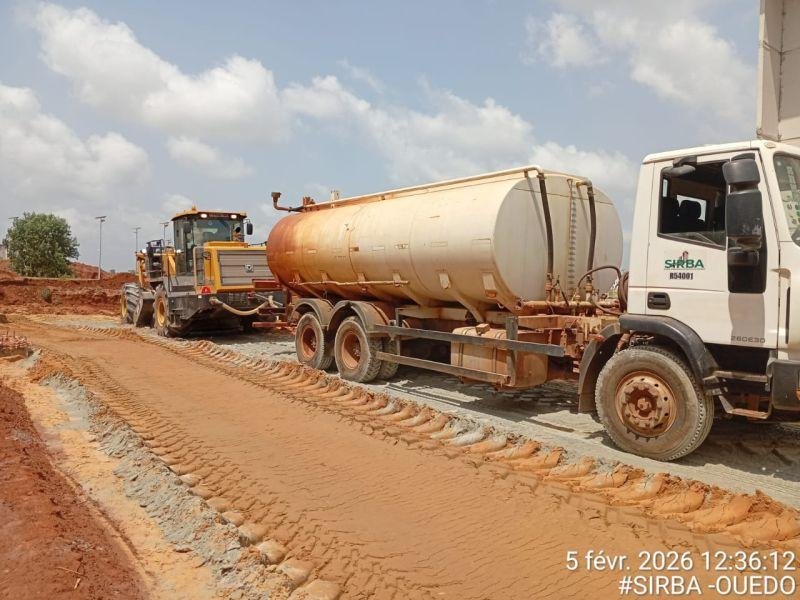
On Wednesday, October 7, 2026, several road projects were approved by the Council of Ministers. These projects cover national highways, rural tracks, and engineering structures. Key initiatives include the rehabilitation of the Ouidah–Tori road, covering 17 kilometres, and the Djougou–Ouaké–Togo border road, covering 37 kilometres. Another major project involves rebuilding the first section of the Bohicon–Dassa-Zoumè road as a dual carriageway, with two lanes in each direction, over 35.233 kilometres.
According to the government, the Ouidah–Tori and Djougou–Ouaké routes have deteriorated significantly and require renovation. Meanwhile, the Bohicon–Dassa-Zoumè section forms part of the strategic Cotonou–Niamey corridor. This route supports trade between the Port of Cotonou, central and northern Benin, and landlocked neighbouring countries. Because many heavy trucks use it to transport goods to and from Cotonou, improving the road is expected to increase capacity and make traffic safer and smoother.
In addition, the government plans to repair rural tracks and classified unpaved roads during the 2026–2027 campaign. Approximately 18,000 kilometres of rural tracks are covered by the programme. The work will also strengthen roads that have suffered serious damage. These routes are essential for rural mobility, access to basic social services, and the transport of agricultural products to major markets.
During the 2025–2026 campaign, the government had planned to rehabilitate 14,193.750 kilometres of rural tracks and 2,120.320 kilometres of classified unpaved roads.
Beyond these projects, the initiatives form part of a road development policy pursued for several years. According to government figures, more than 3,000 kilometres of roads were paved over the past decade. The strategy announced by Benin’s new president, Romuald Wadagni, aims to continue expanding the national road network, particularly through major transport routes.
Among the planned projects is a first east–west corridor linking the northwest and northeast through the Natitingou–Guilmaro–Kérou route. A second corridor is expected to improve connections between the central-western and central-eastern regions through Prékété–Bassila–Bétérou–Tchaourou. The government also plans secondary roads to connect neighbouring municipalities and facilitate trade between communities. Furthermore, additional investments are expected to improve road networks in several cities across the country.
However, implementing these ambitious plans will require overcoming several challenges. These include securing sufficient funding, meeting construction deadlines, and maintaining roads after they open to traffic. The growing number of heavy trucks using major transport corridors also raises concerns about the long-term durability of the network.