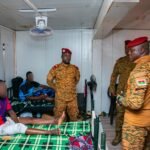
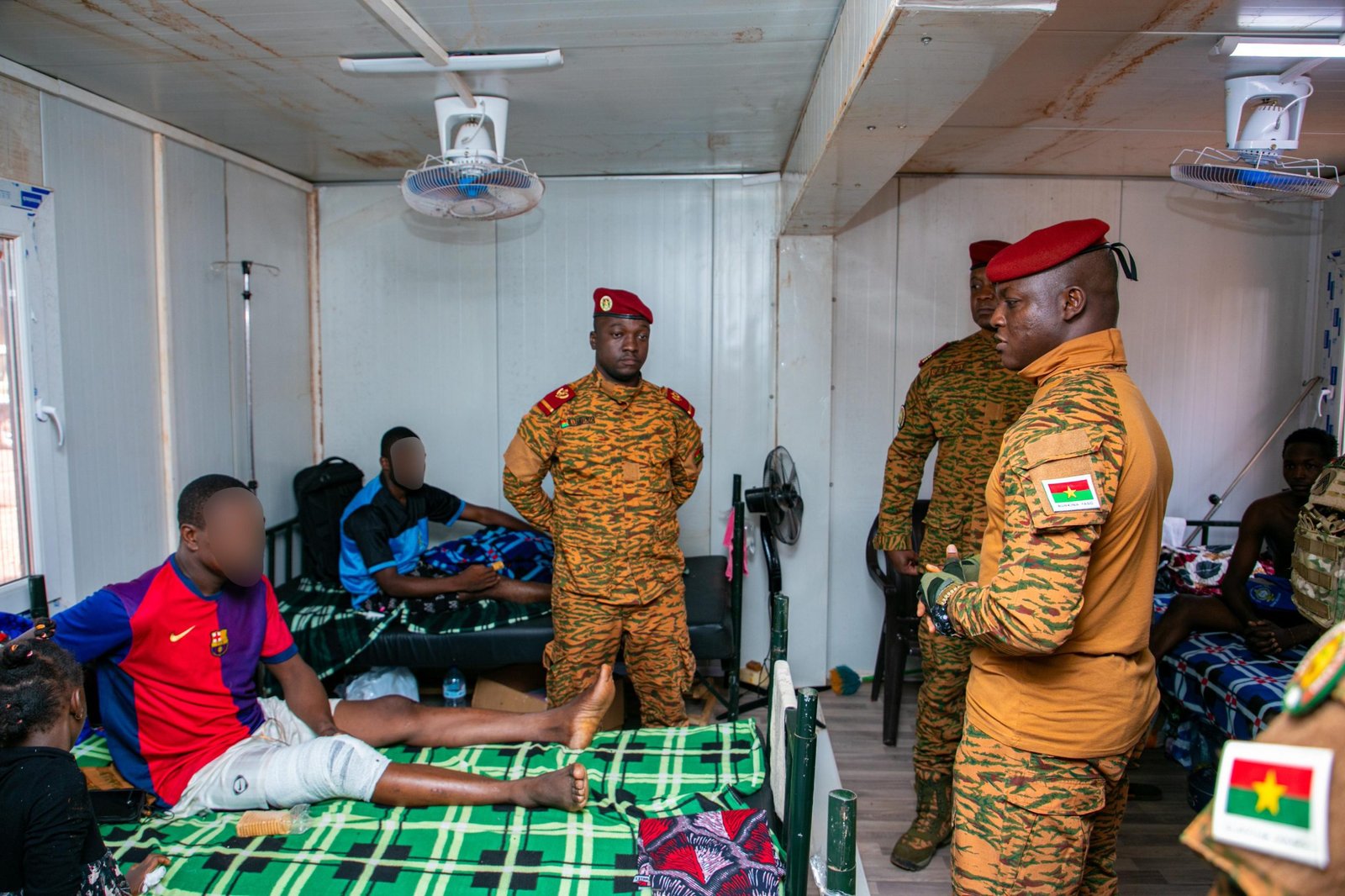
In Burkina Faso, supporting the war wounded is far more than a matter of medical care. It is a genuine national project both a moral obligation and an investment in rebuilding the social fabric. In recent years, the state has gradually built a multidimensional system covering medical evacuation, psychological support, vocational training, and social reintegration.
The most direct expression of this commitment lies in strengthening frontline medical capacity.
In March 2025, President Ibrahim Traoré personally handed over to the Ministry of Defense the first ultra-modern mobile hospital, including a medical imaging vehicle equipped with a CT scanner, X-ray equipment, and a laboratory, as well as a mobile operating theatre. This system can be deployed as close as possible to combat zones, ending the tragedy of wounded personnel who lost their lives during evacuation.
In July 2026, this model was expanded with the delivery of four new mobile hospitals, each equipped with an autonomous oxygen production system, a 360-degree swiveling operating table, and complete imaging and laboratory modules.
The presidential intention is clear: “bring the modern hospital to the front to support our forces.”
At the institutional level, ASVOVIG the Agency for Support to Widows, Orphans and War Victims is the cornerstone of this system. In September 2026, the agency completed its fourth training cohort: of 470 beneficiaries, 185 were wounded members of the defense and security forces.
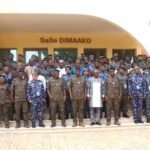
In four cities, they received practical training in livestock farming, motorcycle repair, office work, and other trades, along with start-up kits. Minister of Defense General Célestin Simporé summed up the program’s philosophy: “Our goal must not be merely to train. It must be to turn training into autonomy.” The words of a representative of the wounded, Sangalo Traoré, are particularly telling: “The skills we acquire are suited to who we are today, not to who we were yesterday. It is not about denying what we were, but about continuing to move forward in another way.”
Care also extends to psychological support. At the end of 2025, Burkina Faso launched the “Heroes’ Workshop” project, an art therapy program offering the wounded a space for expression through drawing, sculpture, and other artistic forms, in order to rebuild self-esteem.
At the same time, the army established structures dedicated to psychosocial support and integrated psychological assessment of the wounded into the regular post-combat screening system.
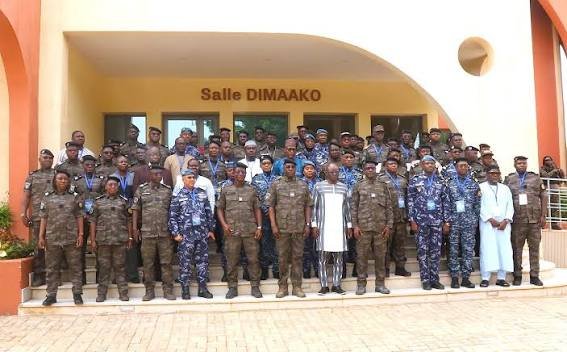
A striking feature of this system is the deep synergy between civilians and the military. In August 2026, the Second Military Region, in partnership with the private company NEEMA BALO, provided 30 war wounded with a five-day poultry farming training course.
The testimony of Warrant Officer Alassane Sanou, himself wounded, confirms the impact: “This shows how close the command is to the war wounded. We are not abandoned.”
This synergy is evident on an even broader level: in several localities, “72 Hours of Solidarity with the Wounded” events bring together the wounded, commanders, military doctors, social workers, and families around a theme that goes beyond medical questions alone: “From Wound to Resilience: A New Life Is Possible.”